The Silent Language of Hands: Decoding the Peace Sign, OK Gesture, and O-Pose
Human communication is a complex tapestry woven from words, tone, and body language. Among the most expressive components of non-verbal communication are hand gestures. While we often focus on what we say, how we position our hands can amplify, contradict, or entirely replace our verbal message. In this exploration of hand semantics, we delve into three iconic gestures: the Peace Sign, the OK Hand, and the circular O Pose. Understanding these symbols is not just about knowing their definitions; it is about grasping their cultural weight, historical evolution, and practical application in modern life.
The Evolution of the Peace Sign: From Protest to Pop Culture
The two-fingered "V" sign, universally recognized as the symbol for peace, has a history that is far more turbulent than its serene name suggests. To understand its current usage, one must look at its dual origins. During World War II, the gesture was popularized by Winston Churchill as a symbol of "Victory." However, the palm-facing-out orientation was crucial; palm-in could be interpreted as an insult in certain Commonwealth countries. It was not until the 1950s and 1960s, during the anti-nuclear and anti-war movements, that the gesture was rebranded as a universal emblem of peace and solidarity.
Today, the peace sign has transcended its political roots to become a staple of casual photography and social media. When you see someone flashing a peace sign in a selfie, they are rarely making a political statement. Instead, they are signaling approachability, friendliness, and a relaxed demeanor. In a business context, however, caution is advised. While acceptable in casual startup environments or creative industries, using informal gestures like the peace sign in formal negotiations or conservative corporate settings may be perceived as unprofessional or overly casual.
Contextual Nuances of the V-Sign
- Cultural Sensitivity: In the United Kingdom, Australia, and New Zealand, the direction of the palm matters immensely. A backward V-sign (palm facing inward) is an offensive gesture equivalent to raising the middle finger in the United States.
- Photographic Utility: The pose is favored in photography because it elongates the neck and creates a sense of dynamic energy, making it a go-to for candid shots.
- Digital Communication: The ✌️ emoji carries the same connotations of peace, victory, or casual farewell in text-based communication, bridging the gap between physical and digital interaction.
The OK Gesture: Precision, Approval, and Misinterpretation
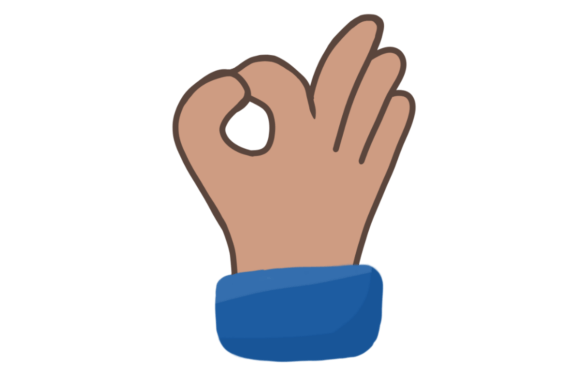
If the peace sign is about broad sentiment, the OK hand gesture is about precision. Formed by touching the tip of the thumb to the tip of the index finger to create a circle, with the remaining three fingers extended upward, this gesture is deeply embedded in Western culture as a sign of approval, agreement, or that everything is "fine." Its origins are debated, with some tracing it to ancient Greek rhetoric where it represented the letter "A" for adokimos (unworthy) or simply a numerical zero, while others link it to the abbreviation "O.K." (oll korrect) from 19th-century American newspapers.
In professional settings, such as aviation, diving, or manufacturing, the OK gesture serves a critical safety function. It is a clear, visual confirmation that systems are nominal or that a task has been completed successfully. This utility highlights the gesture's primary strength: clarity. However, the rise of global connectivity has complicated its meaning. In recent years, the gesture has been co-opted by certain groups as a symbol of hate, a development that has caused significant confusion and concern. While the vast majority of people still use it innocently to mean "all good," awareness of this alternative interpretation is necessary for international travelers and public figures to avoid unintended controversies.
Furthermore, the gesture varies significantly across borders. In France, it can mean "zero" or "worthless." In Japan, it often symbolizes money. In Brazil and Turkey, it is considered highly offensive. Therefore, when traveling or working in multicultural teams, relying solely on the OK gesture for confirmation can lead to misunderstandings. Verbal confirmation remains the gold standard for critical agreements.
The O Hand Pose: Circularity in Expression and Yoga
Distinct from the precise OK sign, the O hand pose generally refers to a broader category of circular hand formations. This can include the "O" shape made by the mouth in surprise, but in the context of hand poses, it often relates to expressive gesturing or specific mudras in yoga and meditation. For instance, the Gyan Mudra involves touching the tip of the index finger to the thumb, similar to the OK sign, but the remaining fingers are often relaxed rather than rigidly extended. This pose is associated with knowledge, wisdom, and mental clarity.
In daily communication, forming a loose "O" with the hand is often used to emphasize a point, indicate a small amount, or describe something circular. It is a soft, open gesture that invites collaboration rather than demanding attention. Unlike the pointed finger, which can seem accusatory, the O-pose is inclusive. In educational settings, teachers often use circular hand motions to help students visualize concepts, such as the cycle of water or the orbit of planets. This kinesthetic learning aid helps bridge the gap between abstract ideas and tangible understanding.
Practical Applications in Modern Life
- Enhancing Public Speaking: Using open hand gestures, including variations of the O-pose, makes a speaker appear more trustworthy and engaging. It reduces perceived aggression and opens the body language to the audience.
- Creative Collaboration: In brainstorming sessions, using neutral, open hand poses encourages the flow of ideas. Aggressive pointing or closed fists can stifle creativity, while open palms and circular motions suggest flexibility and openness to new concepts.
- Mindfulness and Stress Reduction: Incorporating hand mudras, such as the Gyan Mudra (a variant of the O-pose), into daily routines can serve as a physical anchor for mindfulness practices. Holding the pose while focusing on breath can help reduce anxiety and improve concentration.
Navigating Cultural Pitfalls and Common Misunderstandings
One of the most significant challenges in interpreting hand gestures is assuming universality. What is friendly in one culture may be obscene in another. The three-finger salute, for example, has gained prominence through pop culture references like The Hunger Games, symbolizing resistance and solidarity. However, in real-world political contexts, particularly in Southeast Asia, it has been adopted by pro-democracy movements, carrying heavy political weight and potential legal risks for those who display it in certain jurisdictions.
Similarly, the "Hi" wave, seemingly the most benign of all gestures, varies in execution. In some cultures, a vigorous wave is friendly; in others, it is seen as erratic or rude. A subtle lift of the hand is preferred in formal Japanese business interactions, whereas a full-arm wave is common in the United States. Understanding these nuances is part of developing cultural intelligence (CQ), a vital skill in our globalized workforce.
To avoid miscommunication, consider the following guidelines:
- Observe Before You Act: When entering a new cultural environment, watch how locals use hand gestures before adopting them yourself.
- Prioritize Verbal Clarity: Never rely solely on a hand gesture for critical information. Always pair gestures with clear verbal statements.
- Be Aware of Context: A gesture appropriate at a music festival may be inappropriate in a boardroom. Adjust your non-verbal communication to fit the setting.
Conclusion: The Power of Intentional Gesture
Hand poses like the peace sign, the OK gesture, and the O-pose are more than mere physical contortions; they are vessels of meaning, history, and intent. By understanding their origins and cultural variations, we can communicate more effectively and empathetically. Whether you are negotiating a business deal, teaching a class, or simply connecting with friends across the globe, being mindful of your hand language enhances your message. In a world increasingly dominated by digital text, the nuance of human touch and gesture remains a powerful tool for building connection, trust, and understanding. Embrace these silent signals, but use them with awareness, respect, and clarity.